What the two save spaces are really for
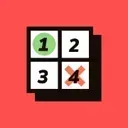
Masterpiece Dash gives you nine pieces and just two save spaces. The saves are not a convenience—they’re your only way to set a piece aside without paying for the information you don’t have yet. Every wrong placement adds one extra attempt, and those attempts decide how well your restoration goes. So the core skill is simple: place confidently, save doubt.
The good news: selecting, inspecting, and saving pieces costs nothing. Only placing a piece in the wrong square adds an attempt. That makes the save spaces a powerful buffer between “I think I know” and “I know.”
Place immediately when you have real confidence
Don’t save a piece just because you’re in a hurry. If a piece clearly belongs to one square, place it right away. Correct pieces lock into the board, which gives you feedback and narrows the other pieces’ options.
You’re probably ready to place a piece immediately if:
- You clearly remember its position from the study view.
- It has a distinctive edge, color area, or detail that only one empty square matches.
- You’ve compared the enlarged piece with the board and nothing else looks similar.
There’s a temptation to hold every piece “just in case.” But the two save spaces are limited. If you spend them on pieces you were already sure about, you’ll have nothing left for the genuinely tricky ones.
Save a piece when you’re not sure enough to guess
The most valuable use of a save is for a piece you can narrow down but not confirm. Maybe it could fit two or three squares. Maybe it looks almost identical to another piece. That’s the moment to park it, not guess.
Parking a piece works because Masterpiece Dash is a process of elimination. As you place other pieces correctly, the remaining empty squares shrink, and saved pieces often reveal their intended spot. You can revisit them with much stronger information than when you first picked them up.
Use a save space when:
- You’ve narrowed a piece to two possible squares and can’t decide.
- The piece would look reasonable in several places, and guessing could cost an attempt.
- You still have many empty squares, so context is limited.
- You want to move on and gather more clues before committing.
Because saving costs nothing, there’s no downside to parking an uncertain piece. The only resource is space: two slots.
A simple two-save rhythm for a cleaner run
The cleanest approach is to treat the saves as “holding spots” rather than permanent storage. Work through the board, parking uncertainty and placing certainty, then return to the saved pieces when the board is more complete.
Here’s a general sequence that works well:
- Study the painting carefully during the preview.
- Tap a piece to enlarge it and scan the board.
- If you can match it to a square with confidence, place it immediately.
- If you’re uncertain, save it right away instead of risking a wrong placement.
- Continue through the remaining pieces, saving up to two uncertain pieces.
- As correct pieces fill the board, revisit your saved pieces and re-evaluate them.
- Place a saved piece only when its spot is now clear.
You don’t have to save the first two pieces you doubt. You can always choose which piece to keep, because selecting and inspecting cost nothing. The best candidates for the slots are the pieces that feel hardest to identify, not the ones you merely glance at.
Tip: A wrong placement costs an attempt; a saved piece costs nothing. When in doubt, park it.
When saving can work against you
The only trap is overusing saves. If you save two pieces early and then leave them untouched because you keep finding new things to investigate, you’re not letting the board guide you. Saved pieces are meant to be re-checked, not forgotten.
Also, if both save slots are full and you meet a third uncertain piece, you’ll have to make a choice: place a saved piece you now feel better about, or take a educated guess with one of the two. Keep a mental stack of which saved piece you’re least sure about, so the space is freed up for the newest doubt.
Deciding at a glance
| Situation | Best move |
|---|---|
| You can identify the correct square immediately | Place now |
| You’re nearly sure but not certain | Save |
| The piece could fit in multiple squares | Save |
| The board is almost full and the spot is obvious | Place now |
| Both saves are full and a new uncertain piece appears | Re-evaluate and place one saved piece, or take a calculated risk |
Save space FAQ
Does saving a piece cost an extra attempt?
No. Only placing a piece in the wrong square adds an extra attempt. Selecting, inspecting, and saving are free.
Can I place a saved piece later without penalty?
Yes. The piece is kept for you to restore when you’re ready, and placing it correctly afterward works exactly the same as any other correct placement.
Is it worth saving a piece if I’m not sure I’ll use it?
Almost always yes. A save is a safe option because it preserves your ability to choose later. The only limit is that you only have two spaces, so save pieces that genuinely need more information, not pieces you can solve on the spot.